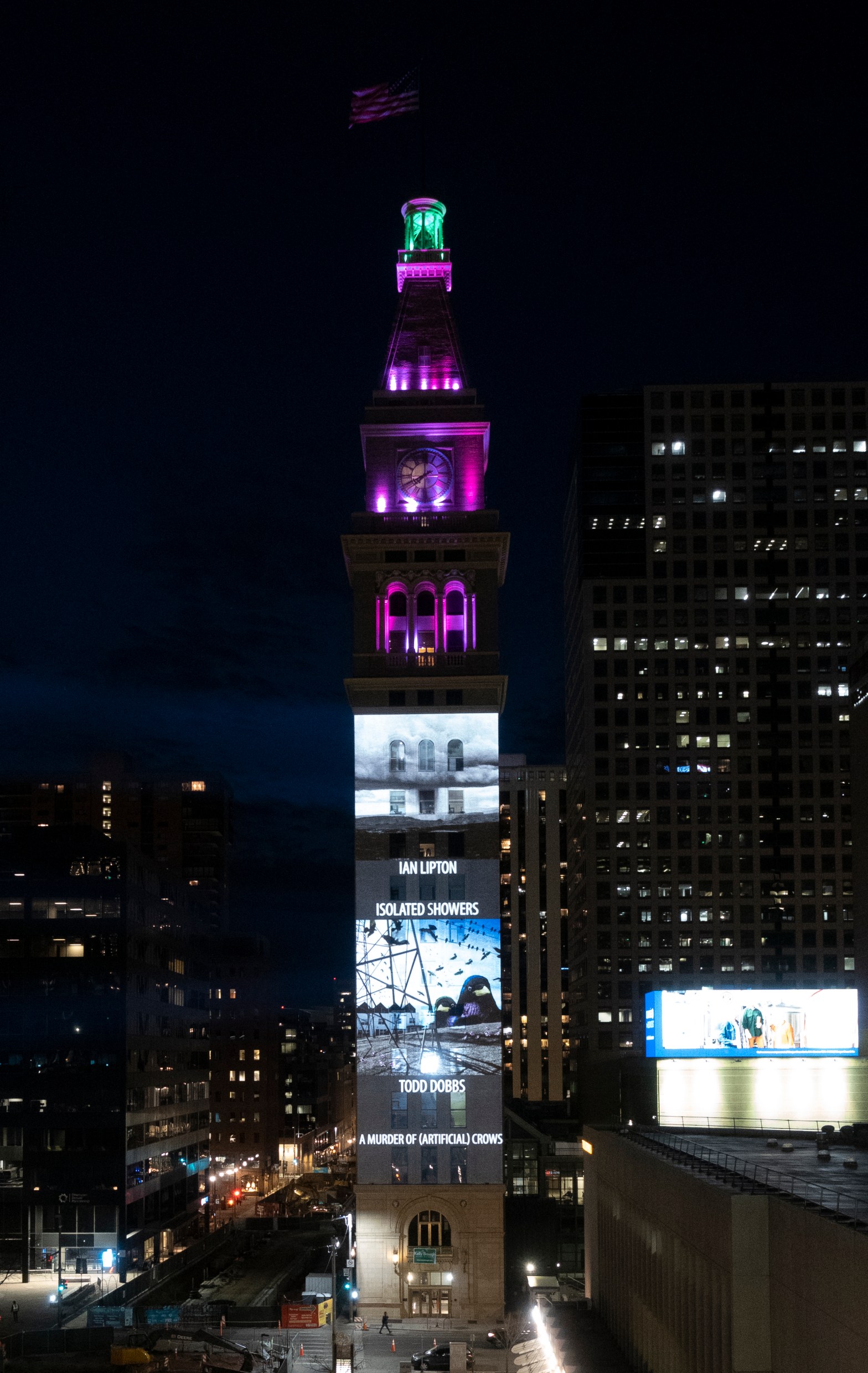
The GIF above shows me in front of the projection on location at the Daniels & Fisher Clocktower in Denver, CO. Full image to the right.
Although I am certainly not a widely exhibited artist, over the years I have had the opportunity to show my artwork in many gallery spaces, however, they are always prints on paper in frames hanging on a white wall in a space with controlled entry. This is the first time in my career that I have had my work exhibited in a public setting with no barriers of entry to view, and it is also the largest my work has ever been displayed at. Viewing the work in person was truly a surreal experience, and one that I will not soon forget, the bar has been set very high now. The projection runs nightly from 6:30-11 PM on the Daniels & Fisher Clocktower in downtown Denver, located at the intersection of the 16th Street Pedestrian Mall and Arapahoe Street.
On September 22, 2022, the first day of Fall, I began an experimental project utilizing the newly released ARC19 metadata standard. ARC19 uses a clever placeholder code where the URL link for an NFT image usually goes to allow the creator to change the image at will, and indefinitely using notes in the Reserve Address. Although this technology was intended for NFTs used in situations such as game avatars where rewards may unlock certain cosmetic features, I have decided to use it to document the creation of a photographic illustration from start to finish.
The first mint of this project was a simple blank canvas, where all photographic illustrations start. A blank canvas is waiting to be filled, and this version of the NFT didn’t even last for 24-hours of the project before I updated the State 2 image.
State 1 – Blank Canvas, 7/29/2022
The project began on the first day of fall, September 22, and will be completed on December 19, 2022. Currently, I am in the final few days of this project, the composite has been finalized and printed for exhibition, and all that remains are the release of the final two states; one documenting the physical print, and the other a signed and dated final digital version. I will post a follow up blog with reflections on this project soon after the final day of the project, this Monday. If you are interested in seeing this artwork on the blockchain, use the NFTx link provided.
From Blank Canvas to Final Draft
This dynamic NFT utilizes ARC19 to allow me to change the image indefinitely while storing all of the previous states in the Txn history. I will be using this as a way to document my artistic process while creating a photographic illustration from start to finish. Owners of the NFT have full personal usage rights for current and previous states of this dynamic artwork.
Notice: Because ARC19 is open-ended and can be changed indefinitely, I have set this as a limited run event and pledge no changes will be made to this NFT after the final day of the project on December 19, 2022.
Second State, released 9/22/22. This dynamic NFT utilizes ARC19 to allow me to change the image indefinitely while storing all of the previous states in the Txn history. I will be using this as a digital sketchpad to explore ideas and works in progress. It could include photography, digital illustration, composites, writing, or one or more of these elements combined at any given time. The artwork may be in progress and unfinished, or completely finished and signed. Owners of the NFT have full personal usage rights for current and previous states of this dynamic artwork.
Third State, released 9/24/22. This dynamic NFT utilizes ARC19 to allow me to change the image indefinitely while storing all of the previous states in the Txn history. I will be using this as a digital sketchpad to explore ideas and works in progress. It could include photography, digital illustration, composites, writing, or one or more of these elements combined at any given time. The artwork may be in progress and unfinished, or completely finished and signed. Owners of the NFT have full personal usage rights for current and previous states of this dynamic artwork.
State 4 9/27/2022. This dynamic NFT utilizes ARC19 to allow me to change the image indefinitely while storing all of the previous states in the Txn history. I will be using this as a digital sketchpad to explore ideas and works in progress. It could include photography, digital illustration, composites, writing, or one or more of these elements combined at any given time. The artwork may be in progress and unfinished, or completely finished and signed. Owners of the NFT have full personal usage rights for current and previous states of this dynamic artwork.
State 5, 10/3/2022. This dynamic NFT utilizes ARC19 to allow me to change the image indefinitely while storing all of the previous states in the Txn history. I will be using this as a digital sketchpad to explore ideas and works in progress. It could include photography, digital illustration, composites, writing, or one or more of these elements combined at any given time. The artwork may be in progress and unfinished, or completely finished and signed. Owners of the NFT have full personal usage rights for current and previous states of this dynamic artwork.
State 6, 10/6/2022. This dynamic NFT utilizes ARC19 to allow me to change the image indefinitely while storing all of the previous states in the Txn history. I will be using this as a digital sketchpad to explore ideas and works in progress. It could include photography, digital illustration, composites, writing, or one or more of these elements combined at any given time. The artwork may be in progress and unfinished, or completely finished and signed. Owners of the NFT have full personal usage rights for current and previous states of this dynamic artwork.
State 7, 10/9/2022. This dynamic NFT utilizes ARC19 to allow me to change the image indefinitely while storing all of the previous states in the Txn history. I will be using this as a digital sketchpad to explore ideas and works in progress. It could include photography, digital illustration, composites, writing, or one or more of these elements combined at any given time. The artwork may be in progress and unfinished, or completely finished and signed. Owners of the NFT have full personal usage rights for current and previous states of this dynamic artwork.
State 8, 10/15/2022. This dynamic NFT utilizes ARC19 to allow me to change the image indefinitely while storing all of the previous states in the Txn history. I will be using this as a digital sketchpad to explore ideas and works in progress. It could include photography, digital illustration, composites, writing, or one or more of these elements combined at any given time. The artwork may be in progress and unfinished, or completely finished and signed. Owners of the NFT have full personal usage rights for current and previous states of this dynamic artwork.
State 9, 10/17/2022. This dynamic NFT utilizes ARC19 to allow me to change the image indefinitely while storing all of the previous states in the Txn history. I will be using this as a digital sketchpad to explore ideas and works in progress. It could include photography, digital illustration, composites, writing, or one or more of these elements combined at any given time. The artwork may be in progress and unfinished, or completely finished and signed. Owners of the NFT have full personal usage rights for current and previous states of this dynamic artwork.
State 10, 10/23/2022. This dynamic NFT utilizes ARC19 to allow me to change the image indefinitely while storing all of the previous states in the Txn history. I will be using this as a digital sketchpad to explore ideas and works in progress. It could include photography, digital illustration, composites, writing, or one or more of these elements combined at any given time. The artwork may be in progress and unfinished, or completely finished and signed. Owners of the NFT have full personal usage rights for current and previous states of this dynamic artwork.
State 11, 10/24/2022. This dynamic NFT utilizes ARC19 to allow me to change the image indefinitely while storing all of the previous states in the Txn history. I will be using this as a digital sketchpad to explore ideas and works in progress. It could include photography, digital illustration, composites, writing, or one or more of these elements combined at any given time. The artwork may be in progress and unfinished, or completely finished and signed. Owners of the NFT have full personal usage rights for current and previous states of this dynamic artwork.
State 12, 10/30/2022. This dynamic NFT utilizes ARC19 to allow me to change the image indefinitely while storing all of the previous states in the Txn history. I will be using this as a digital sketchpad to explore ideas and works in progress. It could include photography, digital illustration, composites, writing, or one or more of these elements combined at any given time. The artwork may be in progress and unfinished, or completely finished and signed. Owners of the NFT have full personal usage rights for current and previous states of this dynamic artwork.
State 13, 11/5/2022. This dynamic NFT utilizes ARC19 to allow me to change the image indefinitely while storing all of the previous states in the Txn history. I will be using this as a digital sketchpad to explore ideas and works in progress. It could include photography, digital illustration, composites, writing, or one or more of these elements combined at any given time. The artwork may be in progress and unfinished, or completely finished and signed. Owners of the NFT have full personal usage rights for current and previous states of this dynamic artwork.
State 14, 11/8/22. This dynamic NFT utilizes ARC19 to allow me to change the image indefinitely while storing all of the previous states in the Txn history. I will be using this as a digital sketchpad to explore ideas and works in progress. It could include photography, digital illustration, composites, writing, or one or more of these elements combined at any given time. The artwork may be in progress and unfinished, or completely finished and signed. Owners of the NFT have full personal usage rights for current and previous states of this dynamic artwork.
State 15, 11/10/2022. This dynamic NFT utilizes ARC19 to allow me to change the image indefinitely while storing all of the previous states in the Txn history. I will be using this as a digital sketchpad to explore ideas and works in progress. It could include photography, digital illustration, composites, writing, or one or more of these elements combined at any given time. The artwork may be in progress and unfinished, or completely finished and signed. Owners of the NFT have full personal usage rights for current and previous states of this dynamic artwork.
State 16, 11/15/2022. This dynamic NFT utilizes ARC19 to allow me to change the image indefinitely while storing all of the previous states in the Txn history. I will be using this as a digital sketchpad to explore ideas and works in progress. It could include photography, digital illustration, composites, writing, or one or more of these elements combined at any given time. The artwork may be in progress and unfinished, or completely finished and signed. Owners of the NFT have full personal usage rights for current and previous states of this dynamic artwork.
State 18, 12/3/22. This dynamic NFT utilizes ARC19 to allow me to change the image indefinitely while storing all of the previous states in the Txn history. I will be using this as a digital sketchpad to explore ideas and works in progress. It could include photography, digital illustration, composites, writing, or one or more of these elements combined at any given time. The artwork may be in progress and unfinished, or completely finished and signed.
State 19, 12/8/22. This dynamic NFT utilizes ARC19 to allow me to change the image indefinitely while storing all of the previous states in the Txn history. I will be using this as a digital sketchpad to explore ideas and works in progress. It could include photography, digital illustration, composites, writing, or one or more of these elements combined at any given time. The artwork may be in progress and unfinished, or completely finished and signed.
State 20, 12/10/22. This dynamic NFT utilizes ARC19 to allow me to change the image indefinitely while storing all of the previous states in the Txn history. I will be using this as a digital sketchpad to explore ideas and works in progress. It could include photography, digital illustration, composites, writing, or one or more of these elements combined at any given time. The artwork may be in progress and unfinished, or completely finished and signed.
State 21, 12/11/22. This dynamic NFT utilizes ARC19 to allow me to change the image indefinitely while storing all of the previous states in the Txn history. I will be using this as a digital sketchpad to explore ideas and works in progress. It could include photography, digital illustration, composites, writing, or one or more of these elements combined at any given time. The artwork may be in progress and unfinished, or completely finished and signed.
State 22, 12/13/22. This dynamic NFT utilizes ARC19 to allow me to change the image indefinitely while storing all of the previous states in the Txn history. I will be using this as a digital sketchpad to explore ideas and works in progress. It could include photography, digital illustration, composites, writing, or one or more of these elements combined at any given time. The artwork may be in progress and unfinished, or completely finished and signed.
State 23, 12/15/22. This dynamic NFT utilizes ARC19 to allow me to change the image indefinitely while storing all of the previous states in the Txn history. I will be using this as a digital sketchpad to explore ideas and works in progress. It could include photography, digital illustration, composites, writing, or one or more of these elements combined at any given time. The artwork may be in progress and unfinished, or completely finished and signed.
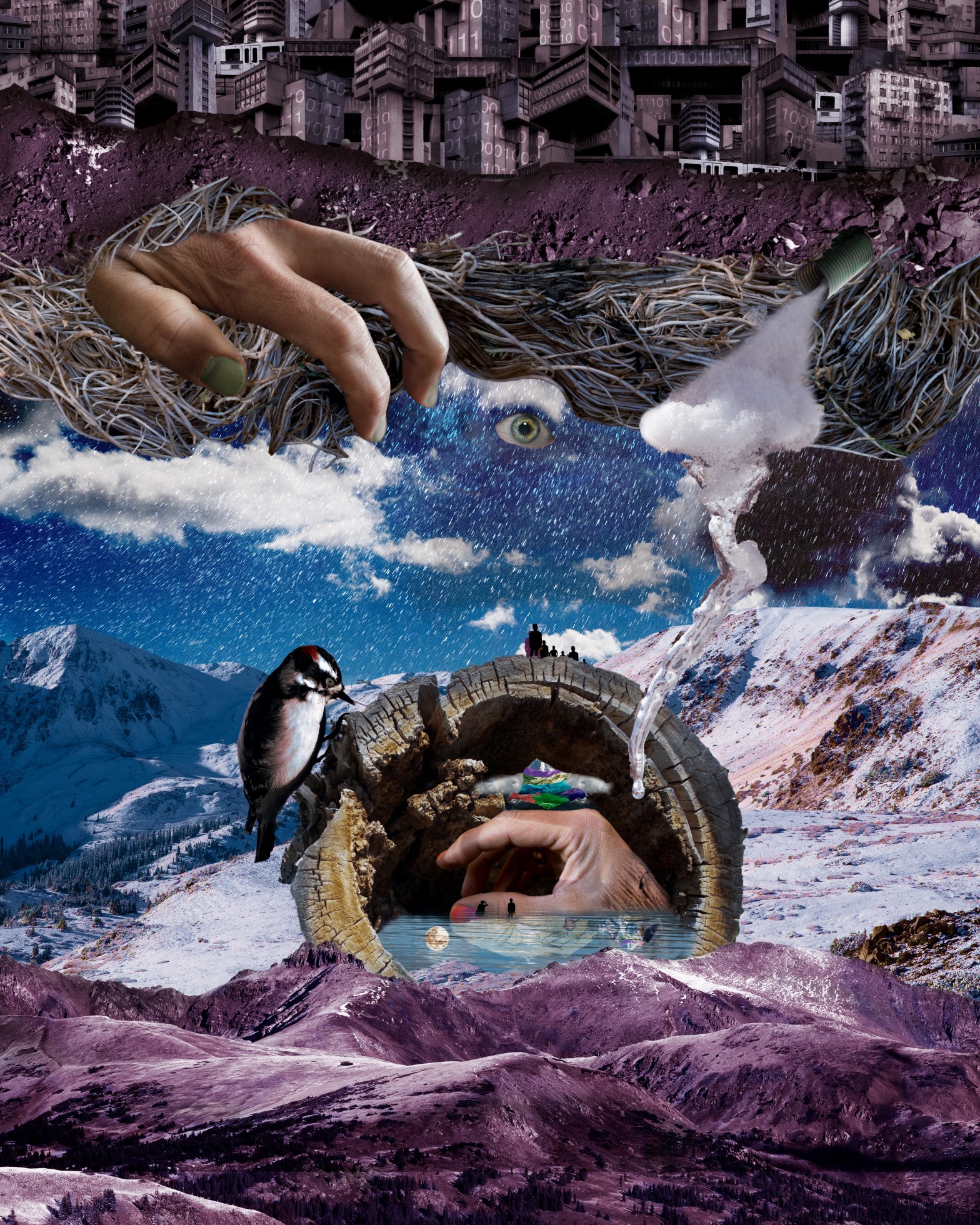
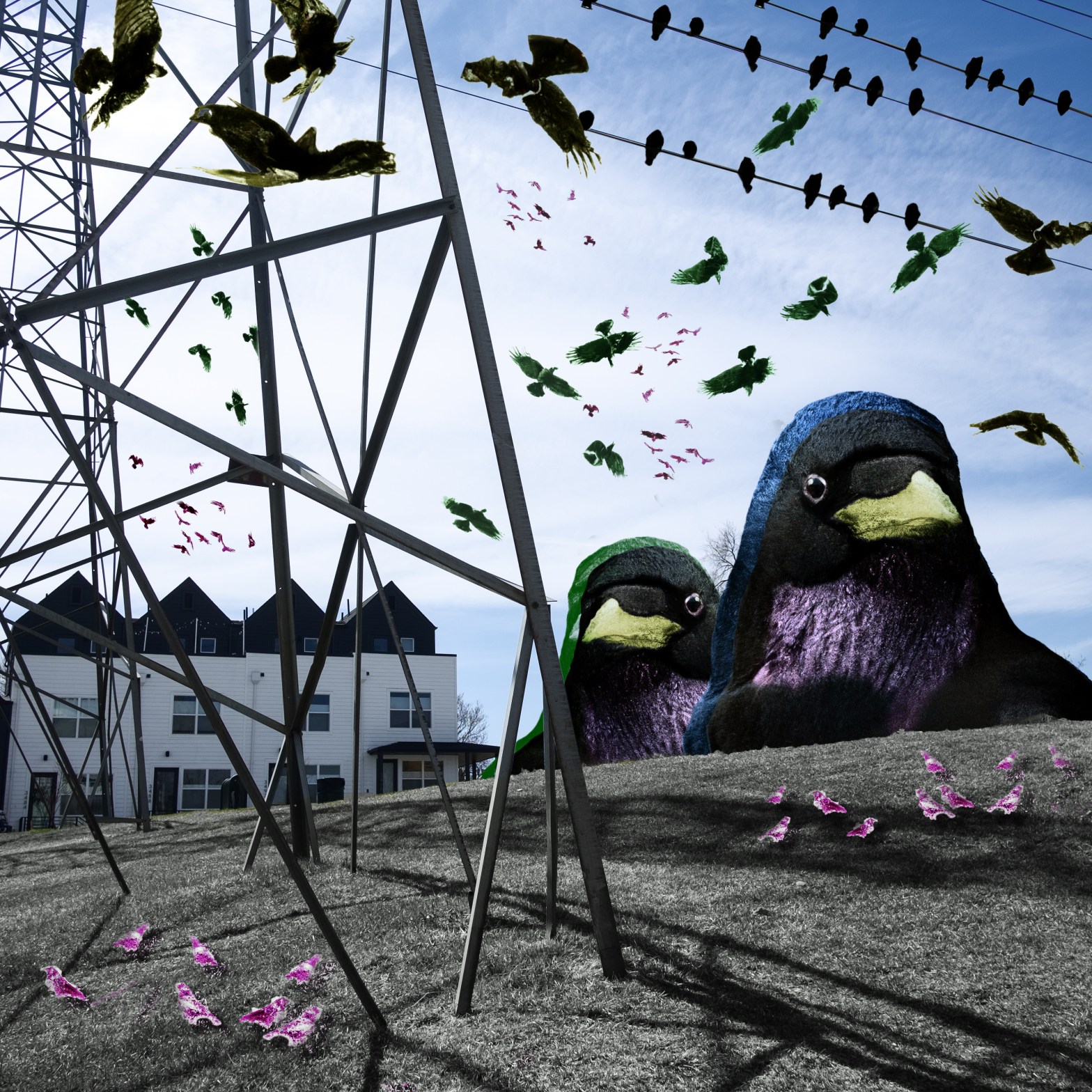
This is the unsigned physical print of the final version of “Dynamic Block: Fall 2022”, no future ARC19 updates will be made to this project. The final composite is an abstract self-portrait, inspired by dreams and emotional reactions to certain locations I frequent, and driven by a desire to create a final work with multiple layers and ample opportunities to discover something new even after several viewings. It is divided into two distinct worlds that are ever merging and feeding one another; the world of order and algorithms (the one we inhabit), and the world of imagination and creativity. Without one there can not be the other, much like my own creative process, the world is a balance between the real and what we can imagine into existence in that reality. In this composite, I am peering into the world of imagination and creativity searching for inspiration, and discovering it in droves everywhere I look. This artwork is dedicated to Morris P. Fertig (1947-2022).
Final Versions
Version 1
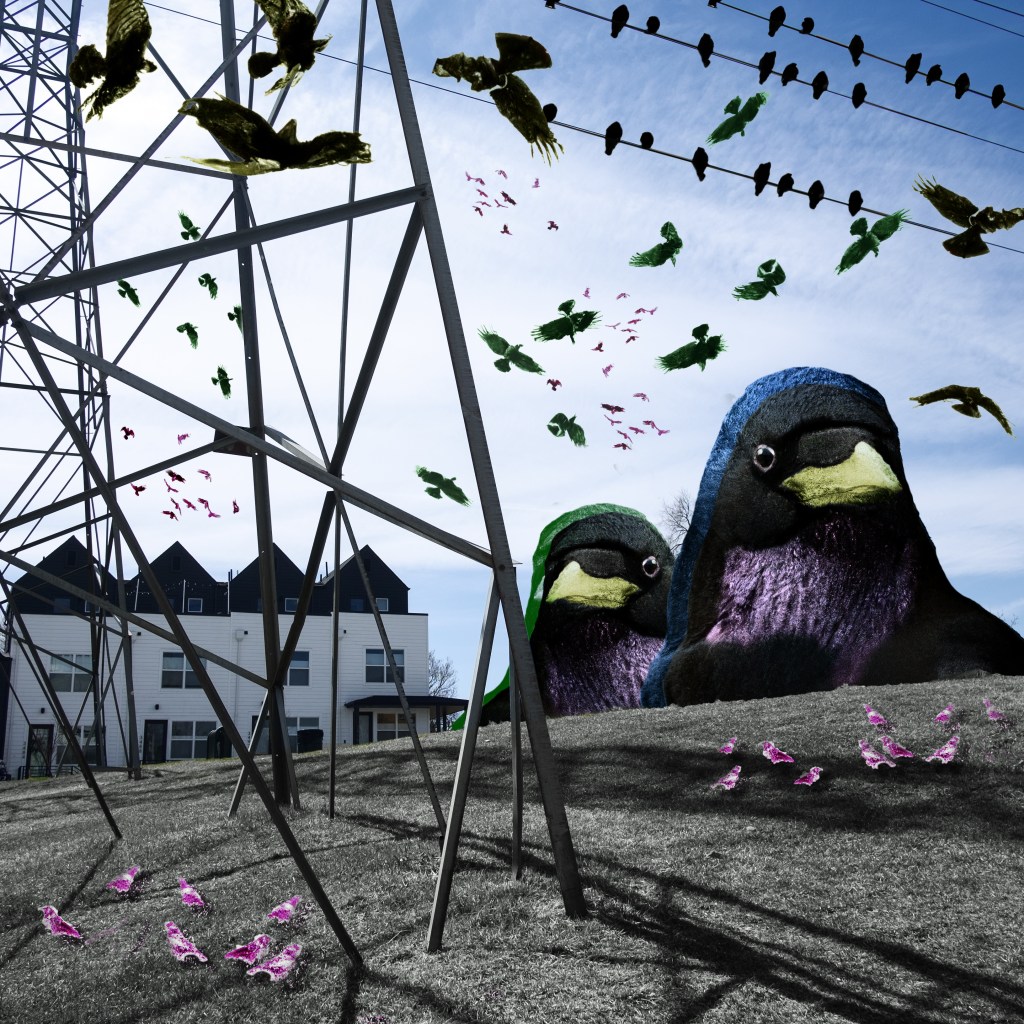
Version 2
Statement: This is the final version of “Dynamic Block: Fall 2022”, no future ARC19 updates will be made to this project. The final composite is an abstract self-portrait, inspired by dreams and emotional reactions to certain locations I frequent, and driven by a desire to create a final work with multiple layers and ample opportunities to discover something new even after several viewings. It is divided into two distinct worlds that are ever merging and feeding one another; the world of order and algorithms (the one we inhabit), and the world of imagination and creativity. Without one there can not be the other, much like my own creative process, the world is a balance between the real and what we can imagine into existence in that reality. In this composite, I am peering into the world of imagination and creativity searching for inspiration, and discovering it in droves everywhere I look.
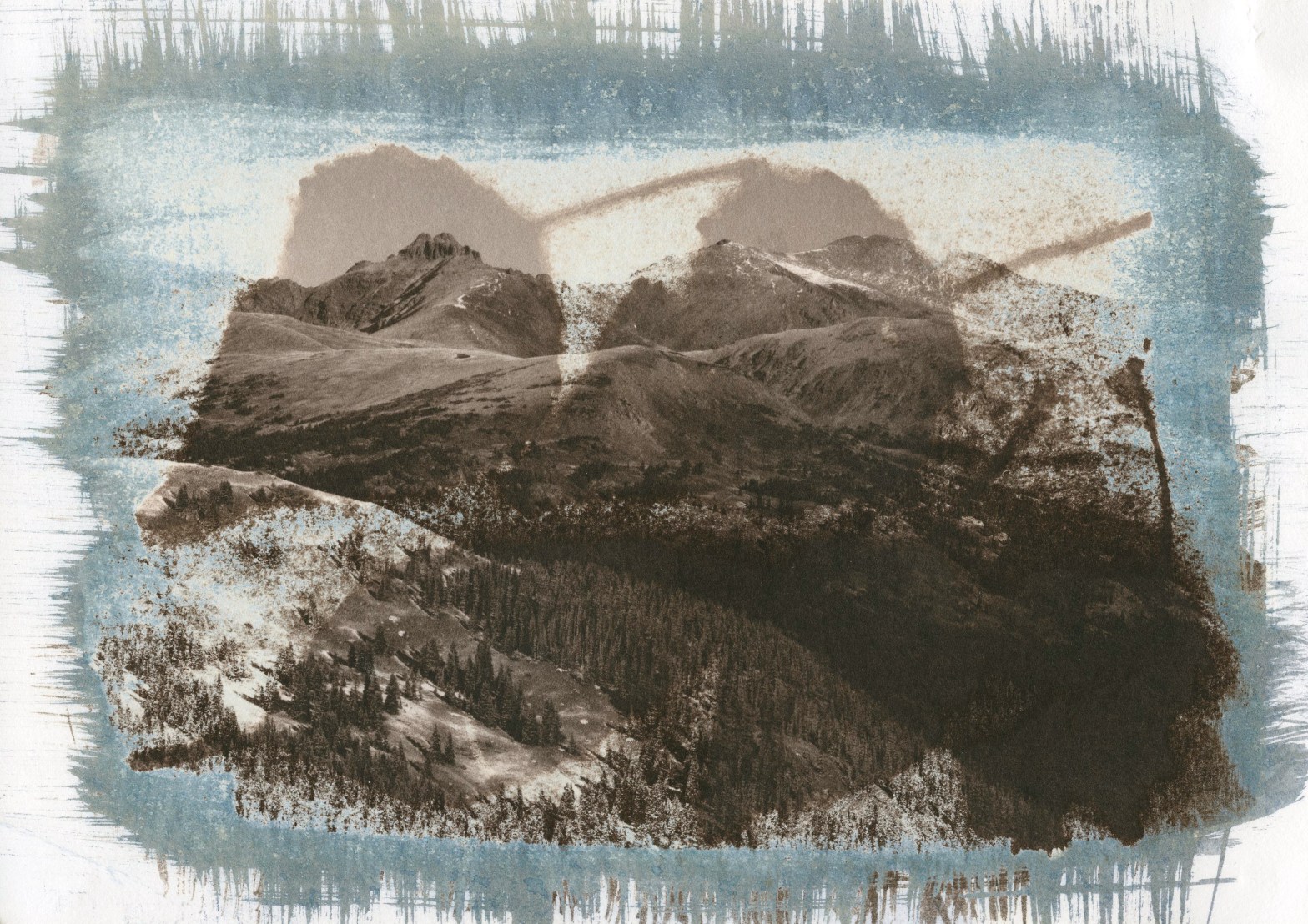
The end of another long academic year is rapidly(and mercifully) approaching, and with it comes the start of my brief sabbatical from teaching to focus on physical activity and my creative urges. I plan to continue exploring two methods of creation; digital illustrations and one-of-a-kind analog objects. Additionally, I plan to re-assess my digital footprint to better utilize my time and energy when publicly sharing ideas and artwork, and to avoid time wasting app scrolling that could be better used for rest, physical activity, or creation. Stay tuned for updates in 2023 of new works in progress, in the meantime I hope you enjoy my most recent experiment posted in this blog, a combo print made using 19th century analog processes – cyanotype and van dyke, one image created camera-less using leaves found in my yard, and one made from a digital photograph printed onto a transparency. Printed Size: ~6×9-inches. Substrate: Rives BFK.
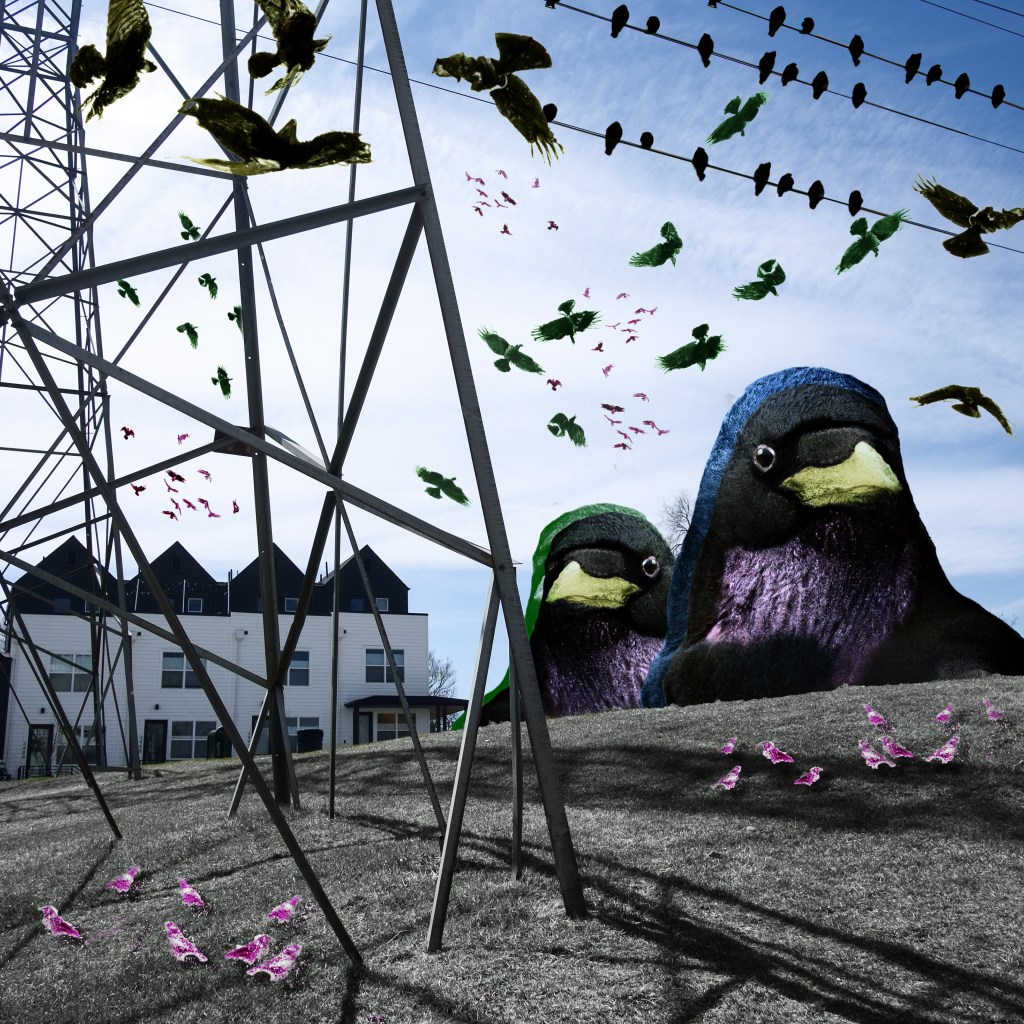
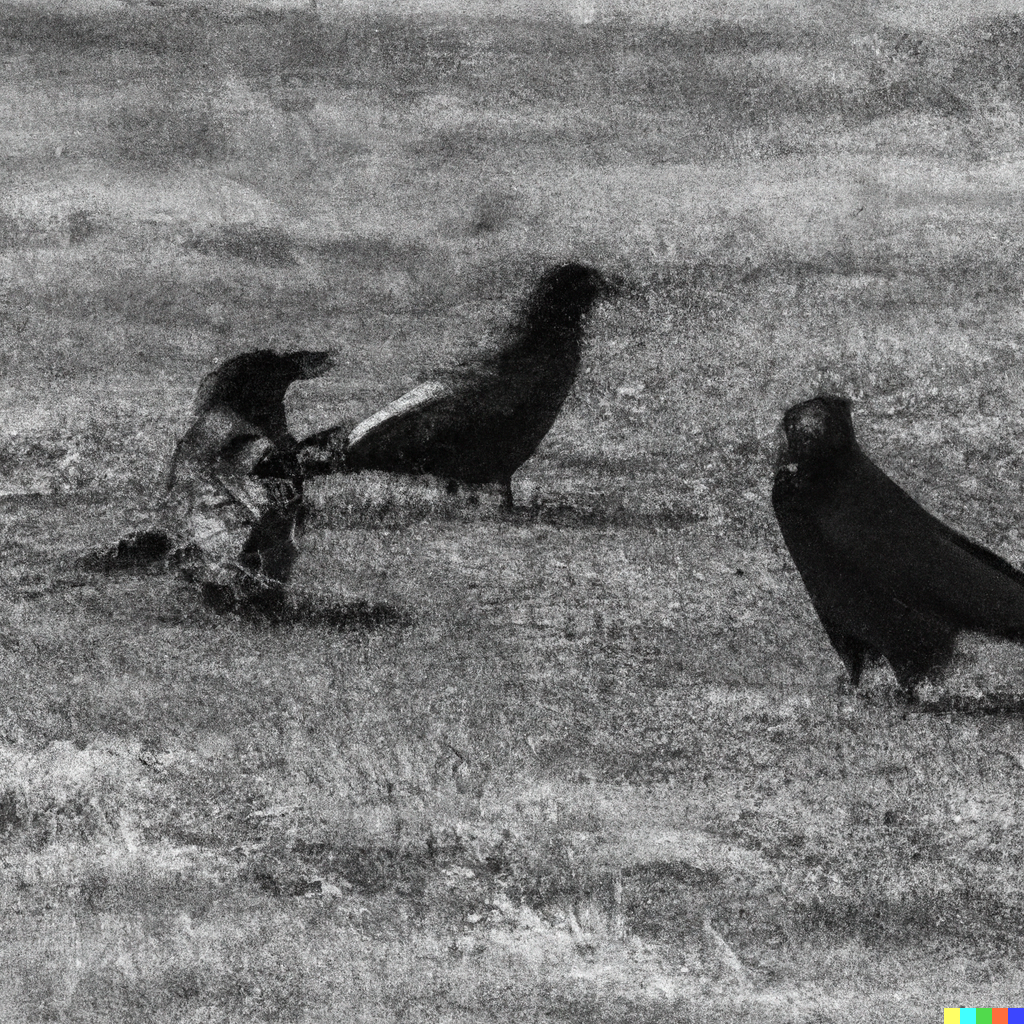
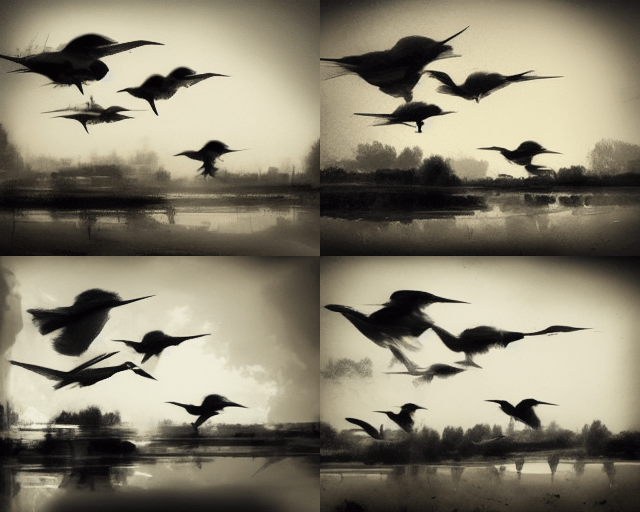
“The crows circled and menaced us, or did they? Over the horizon, I think I saw the Royal Crows controlling their subjects. ‘Caw! Caw! Caw!’ they shrieked as if generated from the pits of hell. Hunkered in our shelter we narrowly escaped, or was it an uneventful day? Memories filtered through an algorithm can be deceiving after all.”
Technical Details
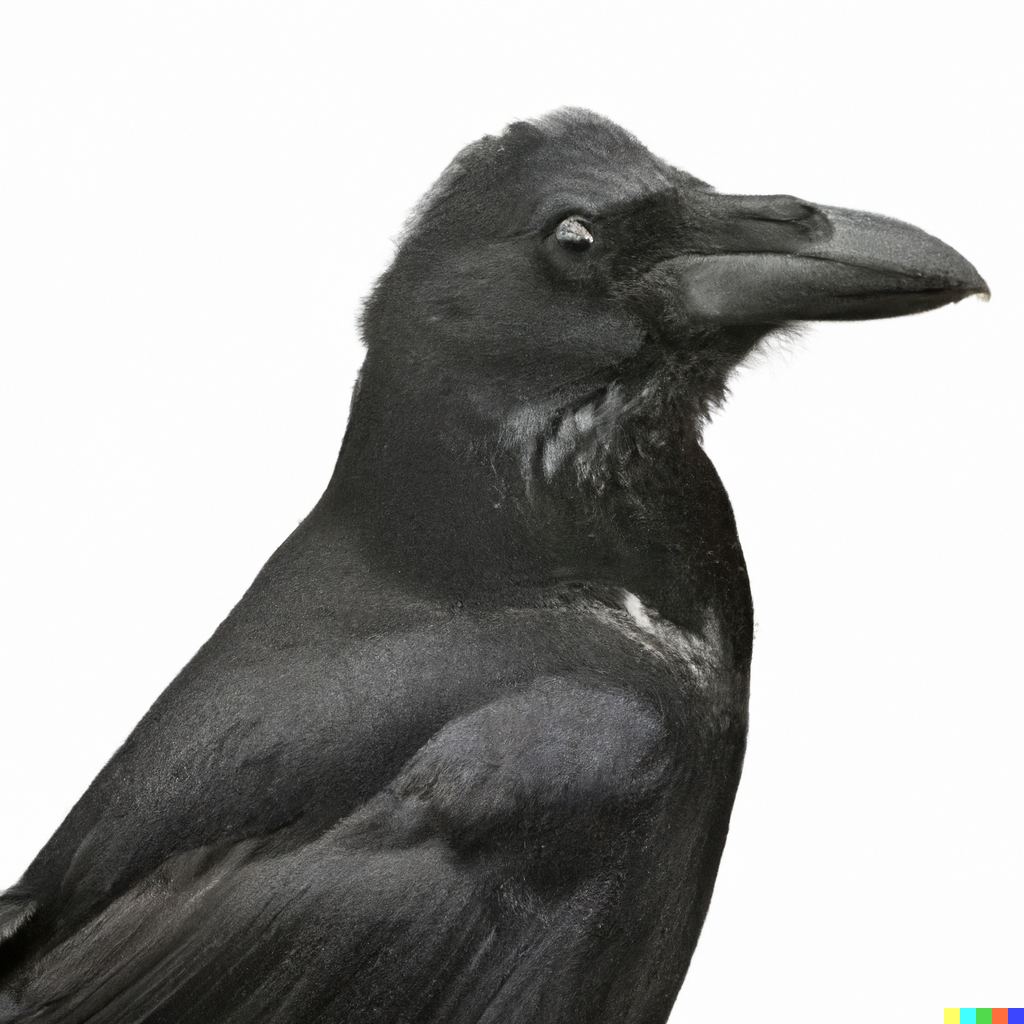
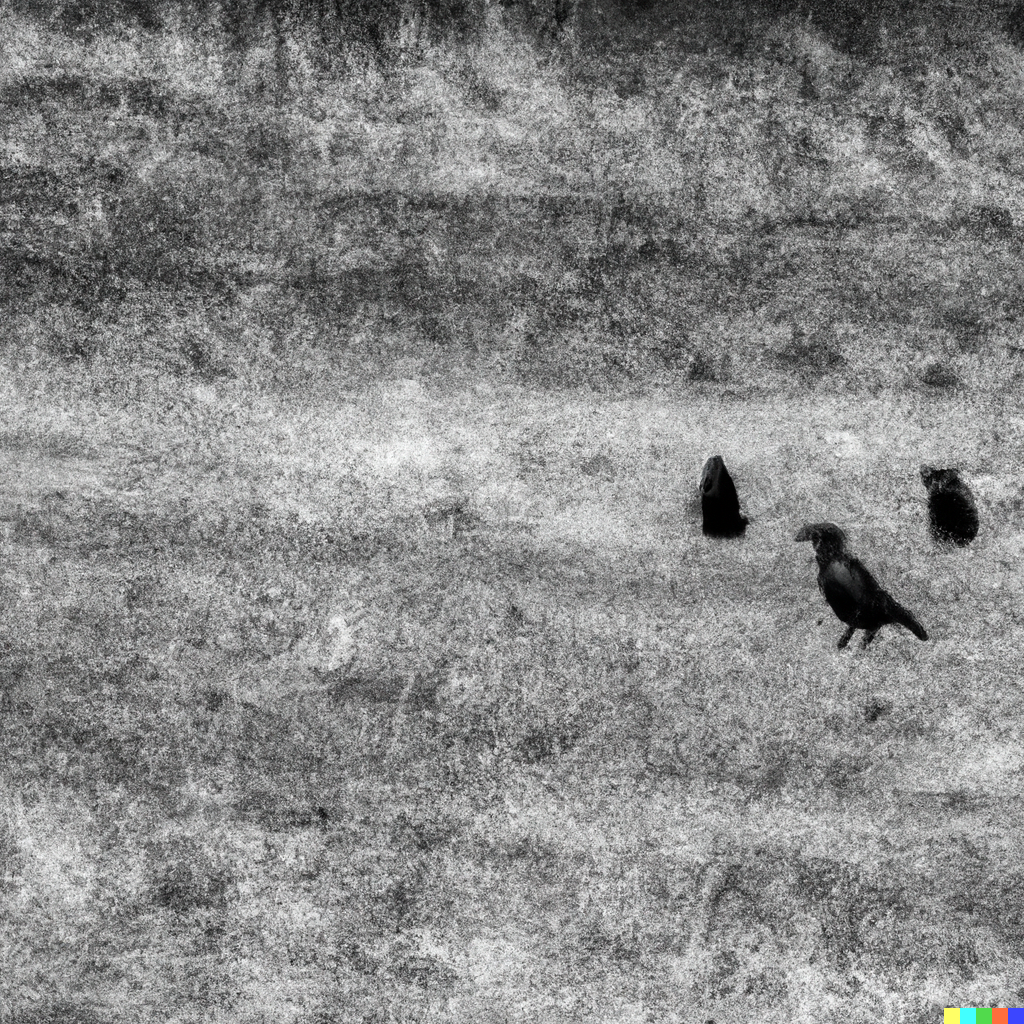
This composite artwork that I refer to as a photographic illustration is the first finished artwork I made utilizing AI for both ideation as well as some of the elements in the final artwork combined with my photography. As I continue to explore this emerging technology that is both muse and an existential threat, I am looking for ways to apply what it is capable of while still maintaining control of my artworks trajectory and content. The result is a ballet between myself and machine, choreographed by intuition, with a constantly evolving outcome.
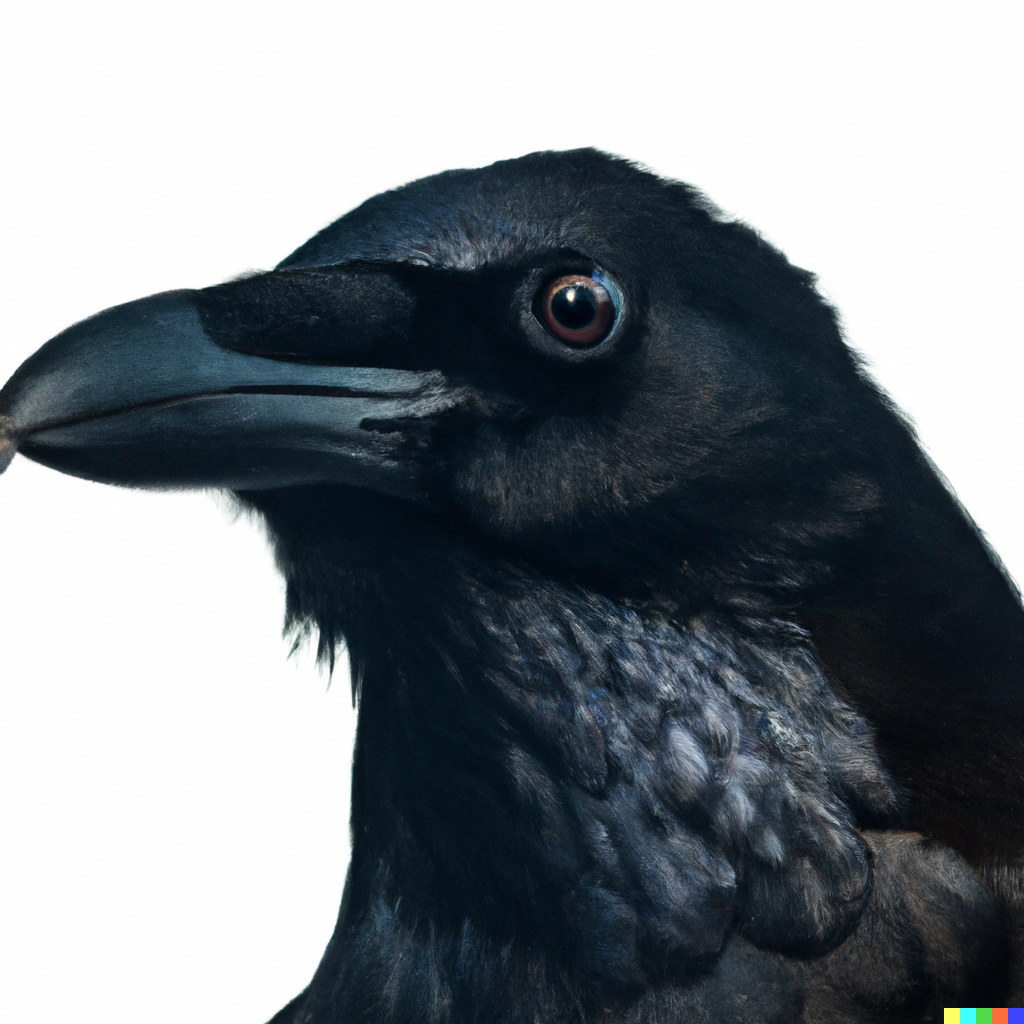
Pictured on the right are examples of DALL-E crow generations that were used in this artwork.
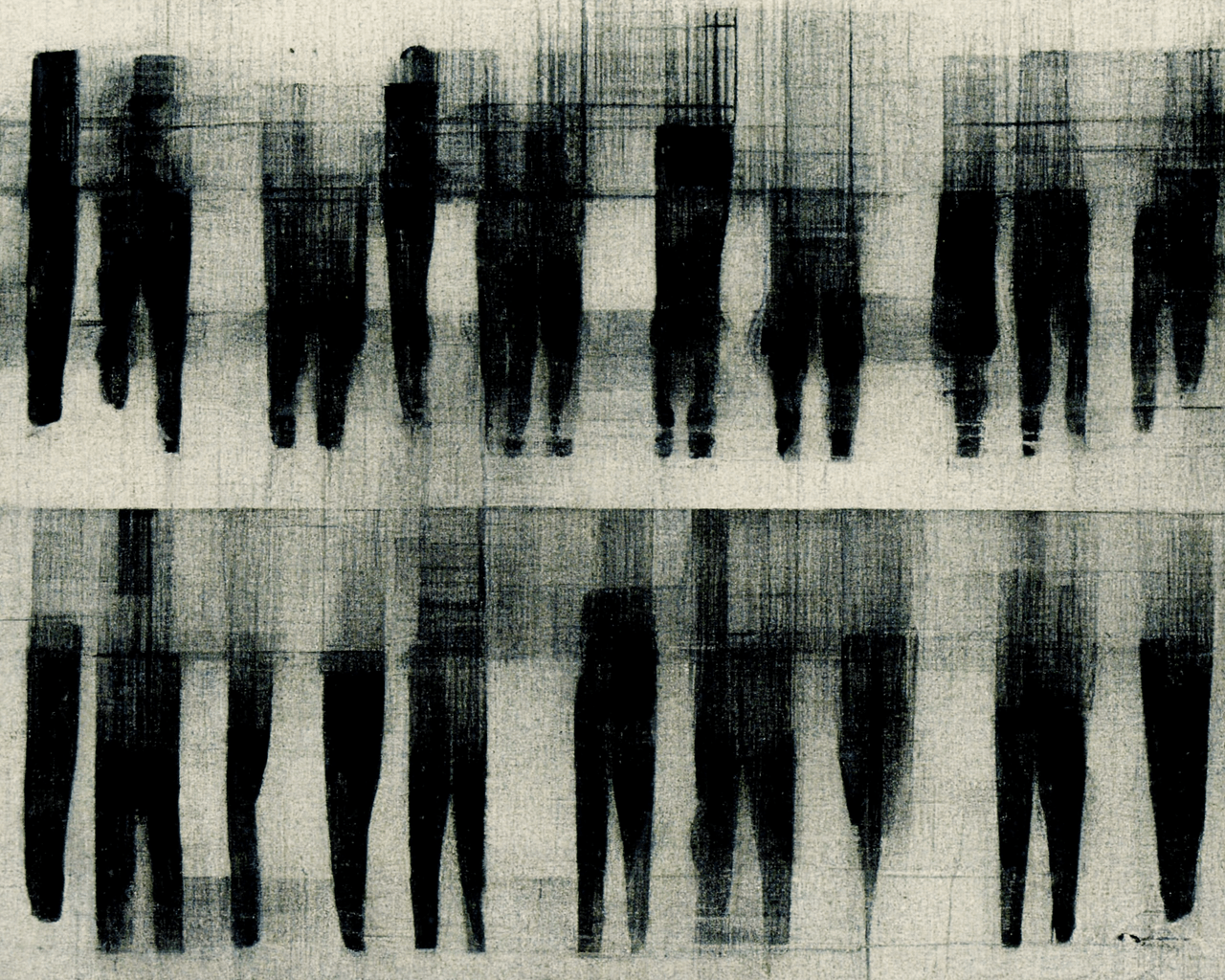
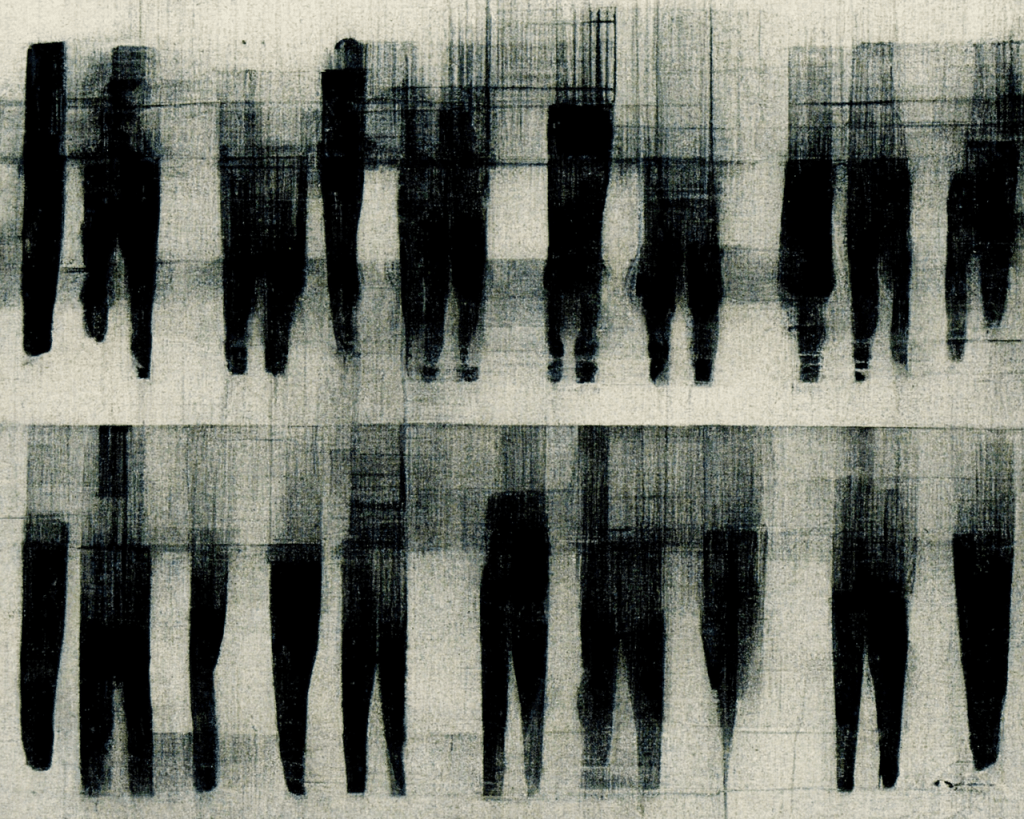
Before photography was embraced as an art form its primary role was one of documentation and observation. Unlike painters, who witness the world in real-time, the camera has the unique ability to freeze motion. Many photographers explored this attribute by studying the motion of humans and animals, and occasionally the two combined. Eadweard Muybridge was most well know for these efforts, documenting hundreds of scenarios, starting with the documentation of a horse running (to prove a bar bet). Other practitioners of that era who also did motion studies included Thomas Eakins, Etienne Jules Marey, and Ottomar Anschutz. It’s argued that these motion studies inspired early exploration in cubism by the artists Edgar Degas and Marcel Duchamp. In my study, I am using the Midjourney AI to reinterpret that same history, specifically, how would robots have appeared in these same studies if they had existed then? Using a machine to visualize how another machine would fit into a history that it knows it doesn’t belong in.
Etienne Jules Marey, Falling Robot Sequence Etienne Jules Marey, Falling Robot SequenceEadweard Muybridge, Robot Locomotion StudyEadweard Muybridge, Robot Locomotion StudyEadweard Muybridge, Robot Locomotion StudyOttomar Anschutz, Series of Robots in FlightOttomar Anschutz, Series of Robots in Flight
Note: I was unable to explore how AI would interpret Thomas Eakins due to nudity filters on Midjourney, unlike the other three artists I mention above, Eakins only did nude studies of humans.





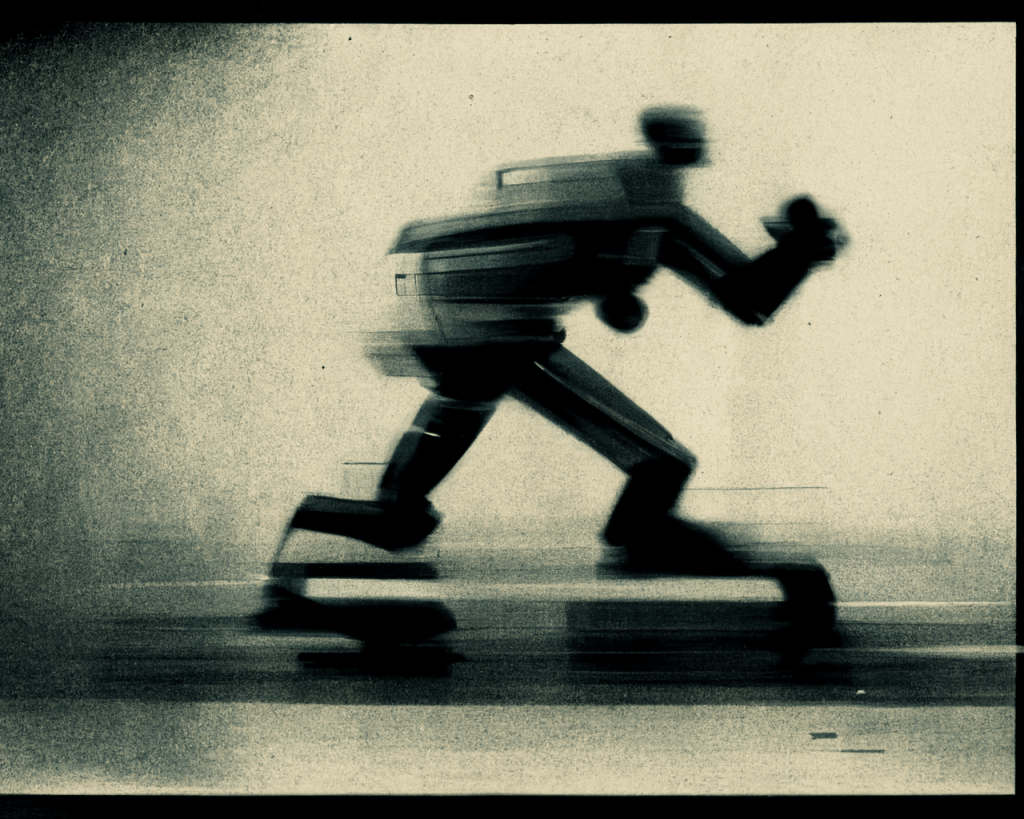
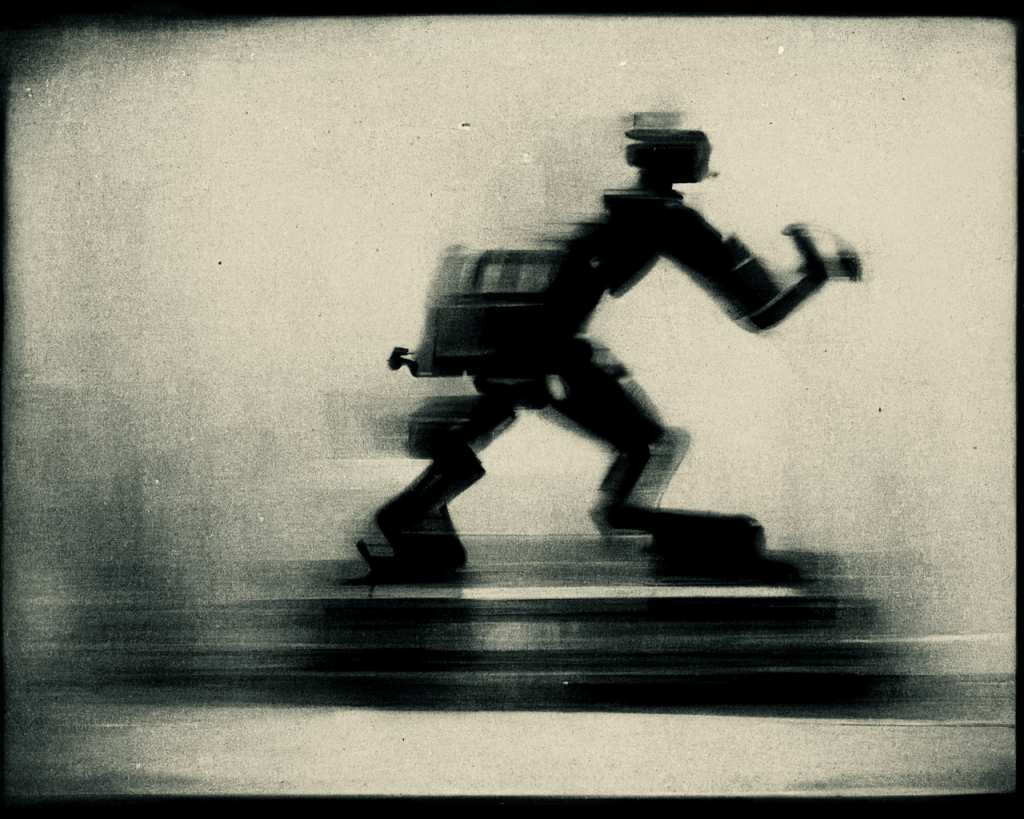
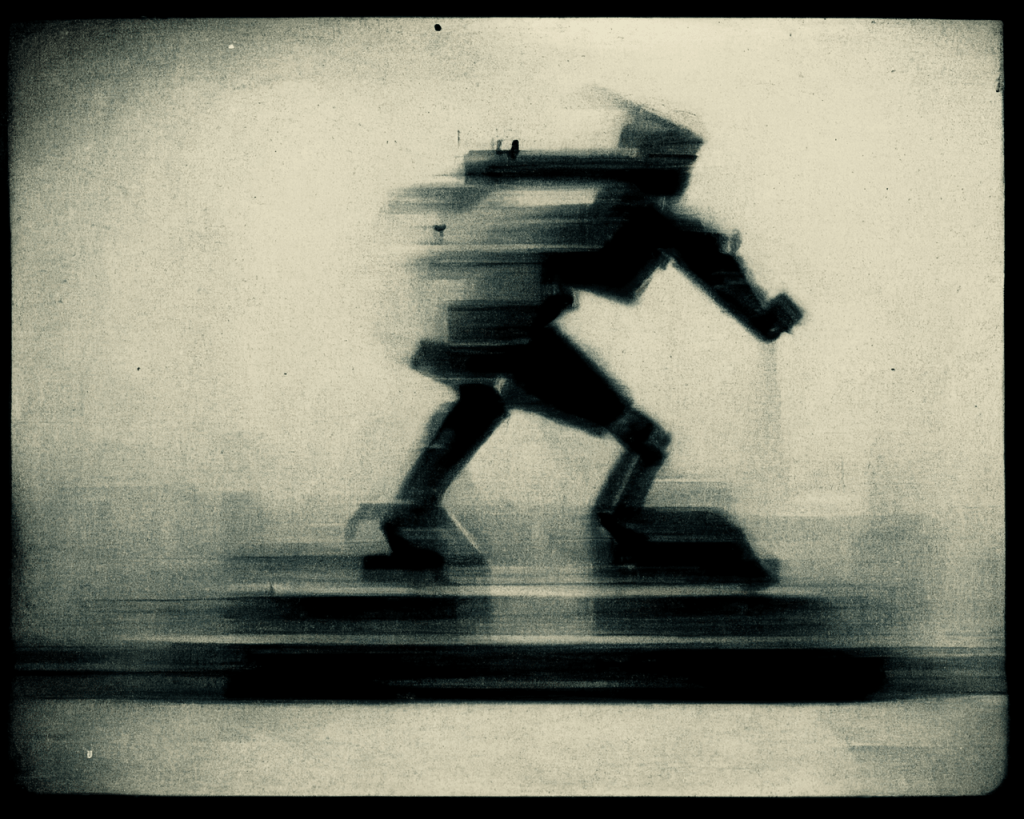
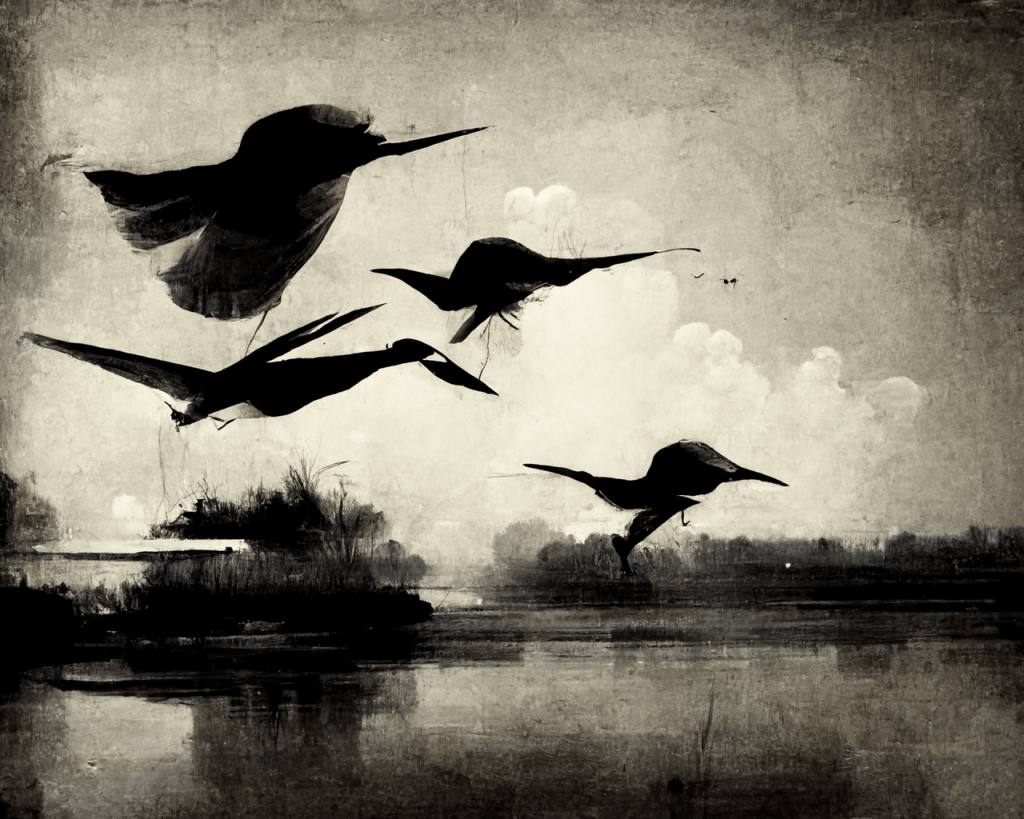
 Conceptual Art by Todd Dobbs
You must be logged in to post a comment.