Hello again, it’s been some time.
In the Spring of 2025, my career was in overdrive; I was regularly posting to my blog, I was exhibiting consistently, and new artwork and website updates were happening on a semi-regular basis. Then life came at me like a Mack Truck at the end of last summer, and everything came to a screeching halt as I tended to my family. Now I am on the winning side of all of that and back in the saddle, so to speak.
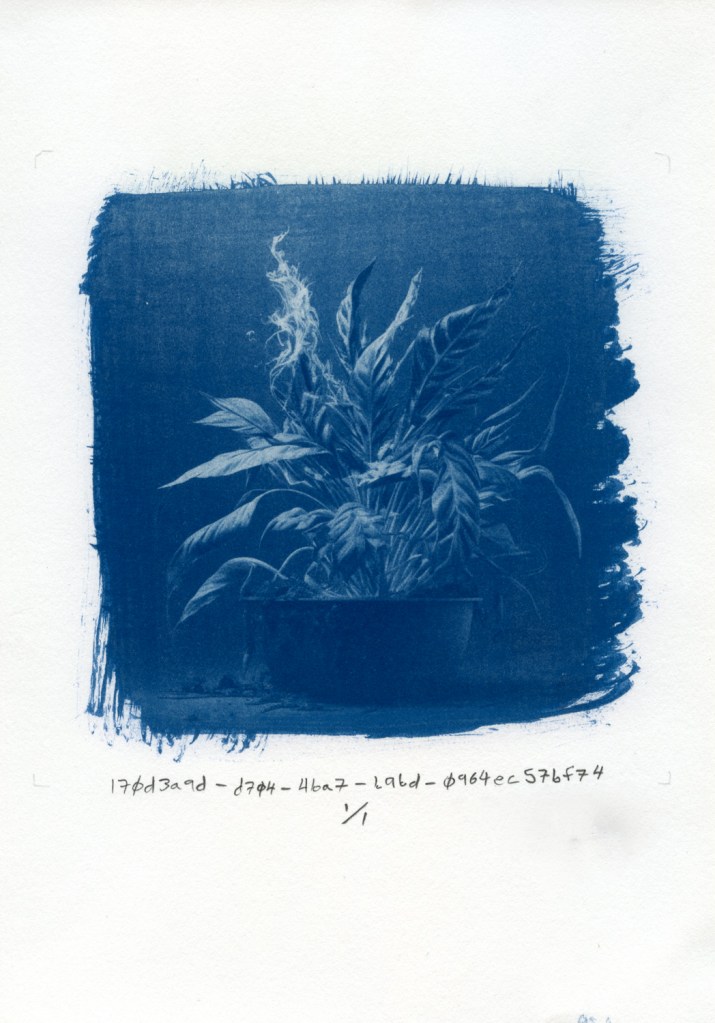
I had some success exhibiting work from the first portfolio of Fake Plants, Real Prints, and was even invited to donate one to an auction for the Colorado Photographic Arts Center as part of their Hal Gould Award Ceremony in 2026 (and it was bought!). The invitation was extra special for me since the recipient of the award was my mentor, Frank Varney, who gave me my first teaching job after graduate school and showed me the ropes of surviving in academia. I knew that a second portfolio of that work would be in my future, but until recently, I was unsure exactly what form it would take.
Rewinding the tape a bit to late winter of this year, a young student in my alternative processes class posed the question, “Can you combine cyanotype prints with wet cyanotype photograms?” I had never considered this combination, but as it turns out, you can. Thank you, Gwen, for steering me in the right direction with that question. She ended up making a fabulous portfolio of photographic portraits (cyanotype) combined with beautiful wet cyanotypes using flowers as large borders for the photographs.
Fast forward to the middle of this summer. I was teaching another section of alternative processes. The week came around when I would normally demonstrate cyanotype and wet cyanotype as separate processes, but this time I decided to try combining them in one print, just like Gwen had done. Sitting on my desk was a large pile of new negatives I had printed for the next portfolio of Fake Plants, Real Prints, so I grabbed one of them to make the cyanotype that I demoed on a Monday, and then on that Friday I did a wet cyanotype around the borders of the image using flowers, sea salt, and soap suds. The print turned out amazing, and it got the wheels spinning in my creative mind.
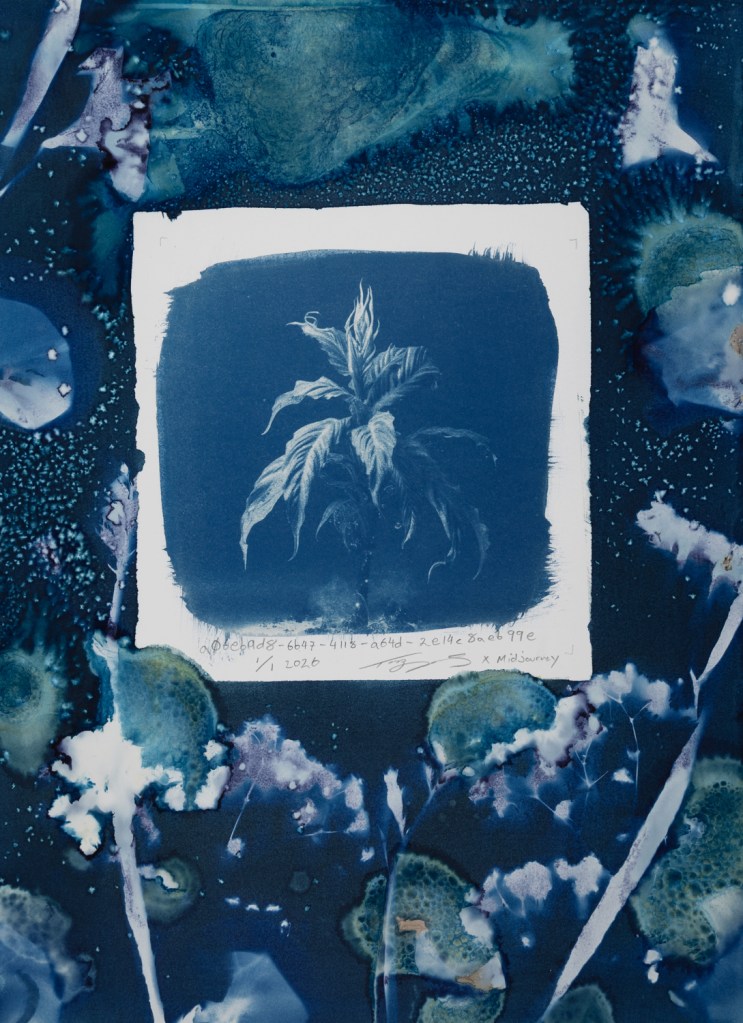
I had exhibited the original iteration of this work along with real fake plants, as an installation of sorts. People seemed to like the additional layer that added to the concept, and I was one of them. With this technique of combining cyanotype with wet cyanotype, suddenly I could use real plants to frame my (real prints of) fake plants, and increase the uniqueness of each one while also increasing my physical interaction with each artwork in the process.
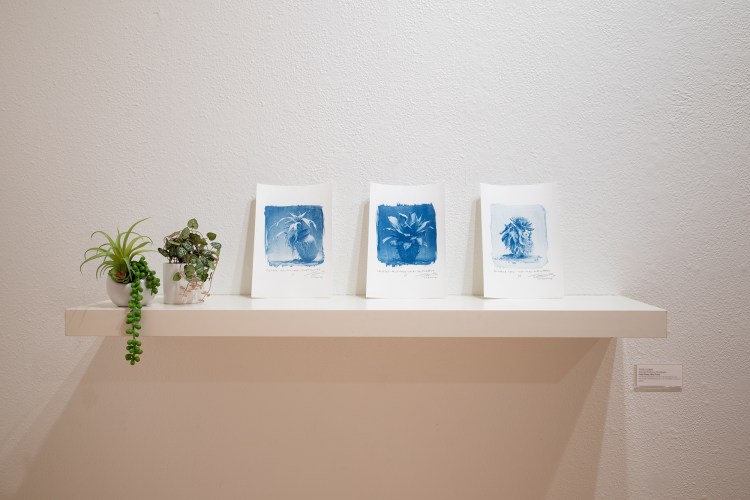
I have spent the past 4-weeks producing over 25 unique prints for this series, which I ultimately culled down to 14 final prints for the portfolio. I decided to name the new portfolio simply Fake Plants, Real Prints v2.0. Each print is a unique 1/1 edition, just as the first portfolio was. The titles of each print come from the seed that Midjourney uses to identify each individual outcome using the same prompt “studio photograph of an unhealthy houseplant”, allowing it to fully collaborate in each artwork. They are signed with my name and Midjourney, as I consider them a collaboration of sorts.
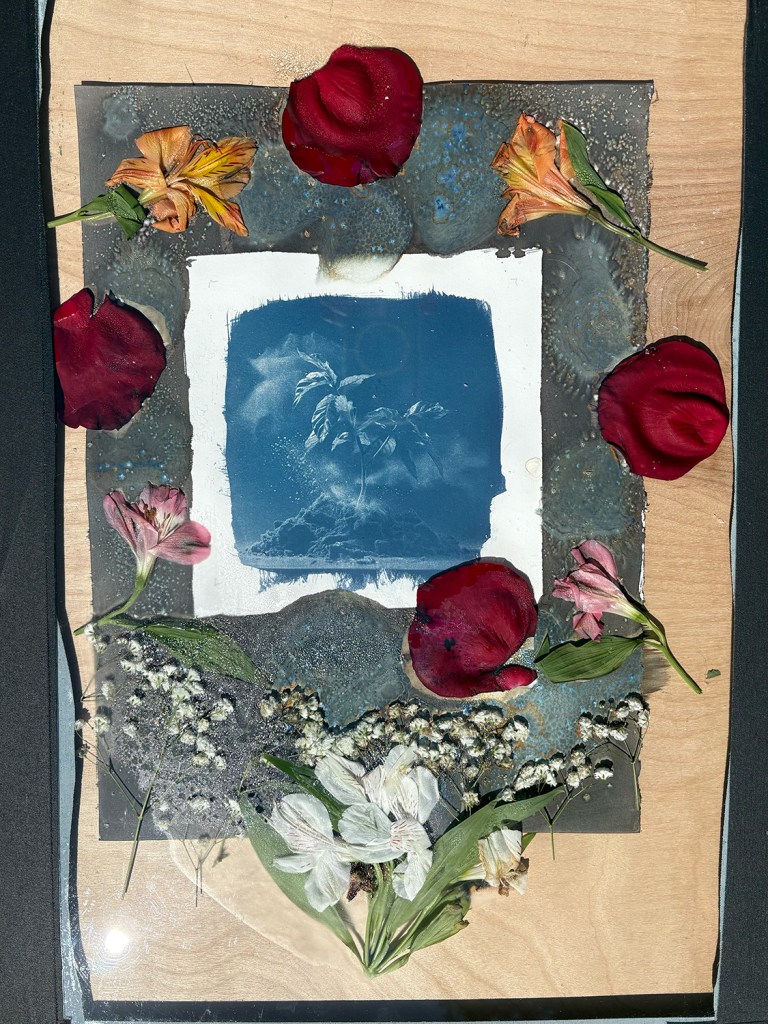
Just as I did in the first portfolio, my probing is about the authenticity of art in the age of AI: is it art? Does it have value? Am I the creator? Is this just some type of techno-trickery? I honestly don’t have answers, but I do know this – I was excited by each unique result that the wet cyanotype process created, excited in a way I get when I make authentic artwork that is entirely human made. So in that regard, this portfolio is a success.
It feels good to be back.


This was wonderful to read! I love the long form narrative and how you take us through what happened. AND I’m glad you are back!!!! Keep going, I’m a huge fan of your work! Sent from Regan’s iPhone…–Everyone you meet is fighting a battle you know nothing about. Be kind, always–
LikeLike