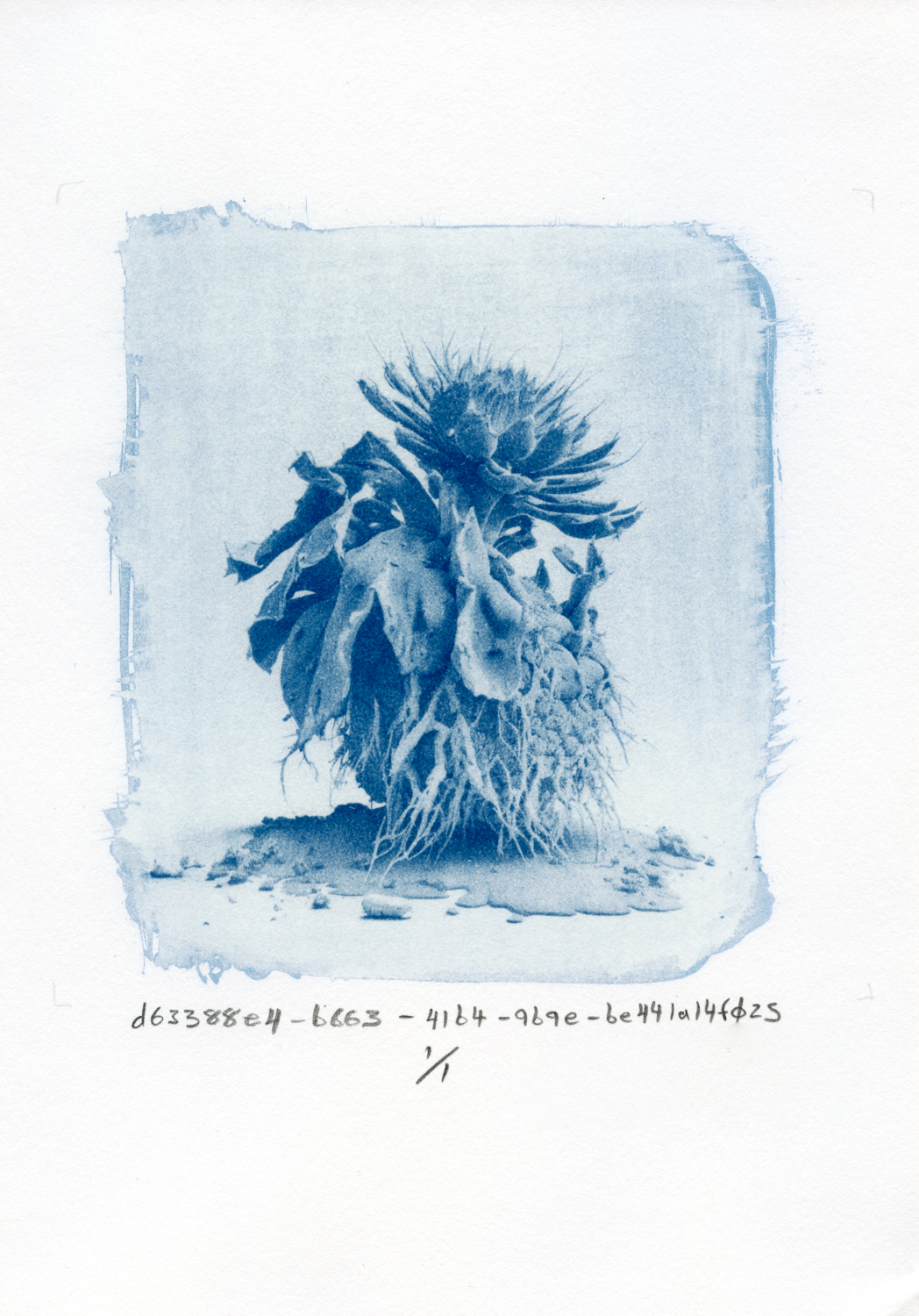
The first completed portfolio of “Fake Plants, Real Prints” contains 12 handmade prints that are all limited to 1/1. This collaboration between myself and the Midjourney AI (Version 5.2) is a conceptual project exploring the authenticity, originality, and value of artworks that have human-created alterations to artificial intelligence image generations, or in this case, reproduction of those generations using a handmade process. As the creation of high-quality digital illustrations becomes increasingly common and accessible these issues will no doubt become part of the larger dialogue in the art world, specifically the fine art marketplace.
The titles, all hand-written directly under the printed image, came from the seed Midjourney associates with the unique images that were all created using the same prompt: studio photograph of an unhealthy house plant, just like the image outcome every seed is unique. This, in addition to printing each selected image by hand, makes this a collaboration between myself and the learning model. By making this blog post, these reproductions will no doubt be fed back into a learning model contributing to future image generations’ outcomes – this completes the cycle between machine and human, having come full circle, only to begin the cycle once more. Although the original image content is easily reproducible like all digital media, I elect to only allow one single handmade print of each selected image to exist, all other copies made along the way were destroyed. Does this fact make these prints valuable? Based on recent feedback from those reviewing the work in person, it appears it does. Somehow the mere act of making something by hand using an output coming from a machine has imbued these objects with the same power we associate with other traditional forms of art. This should sound familiar, it’s after all how photography gained its value – as a print medium with images made by a machine.

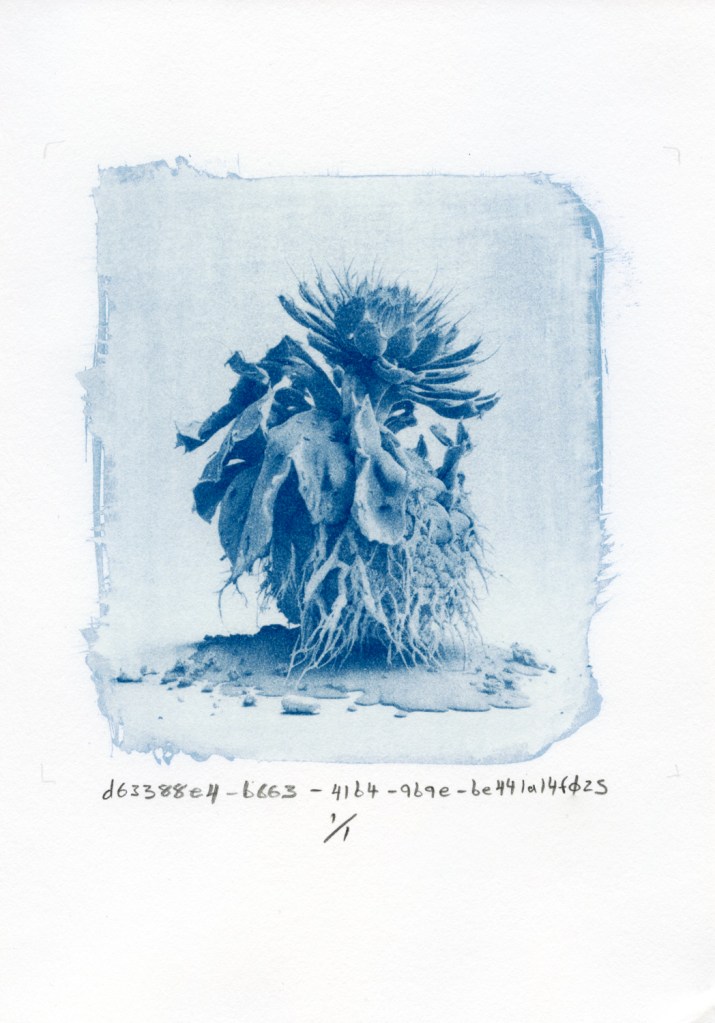
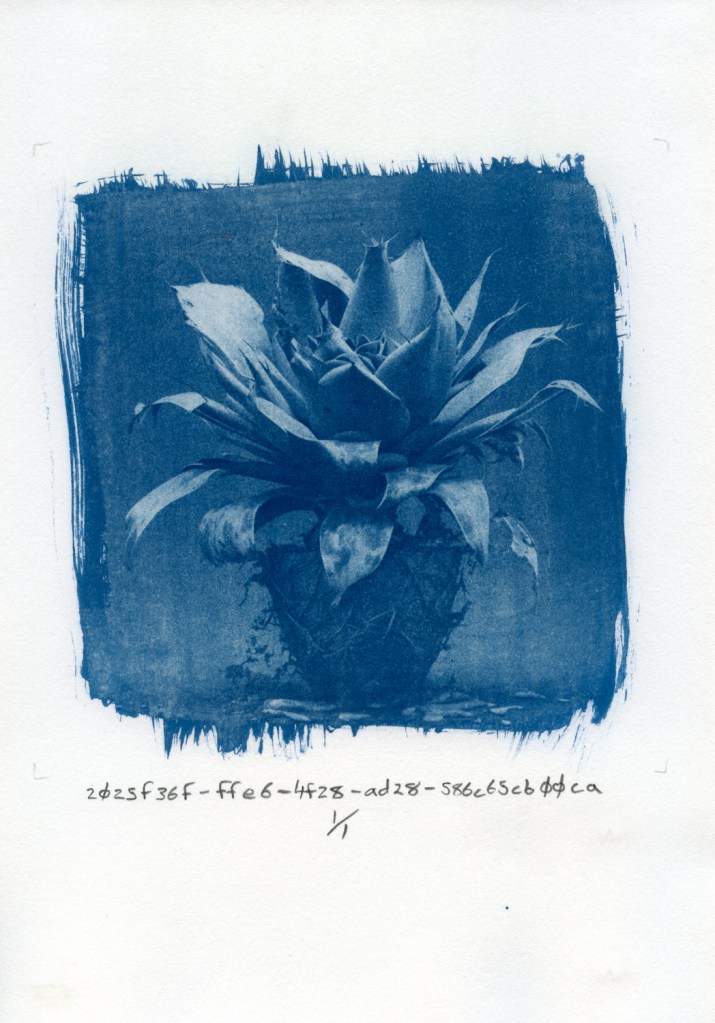
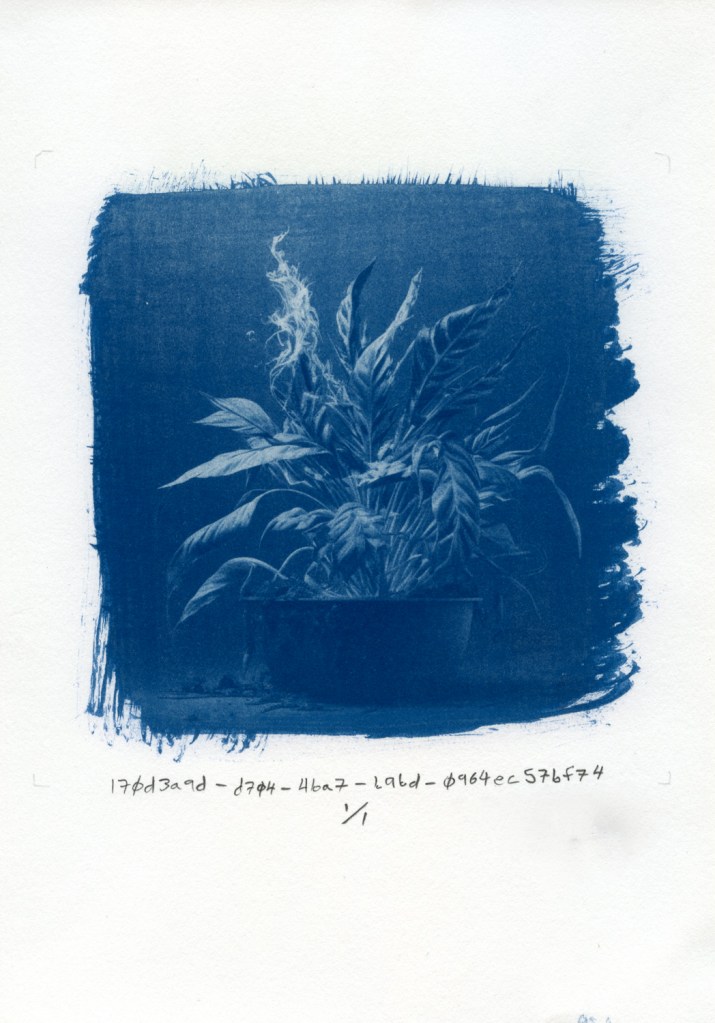
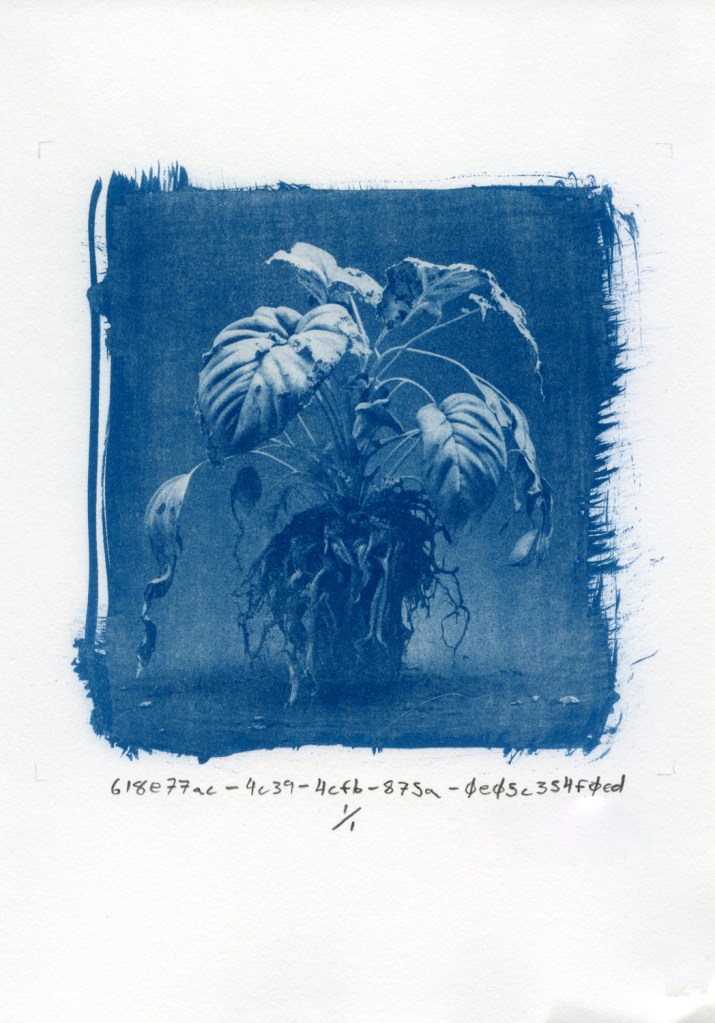


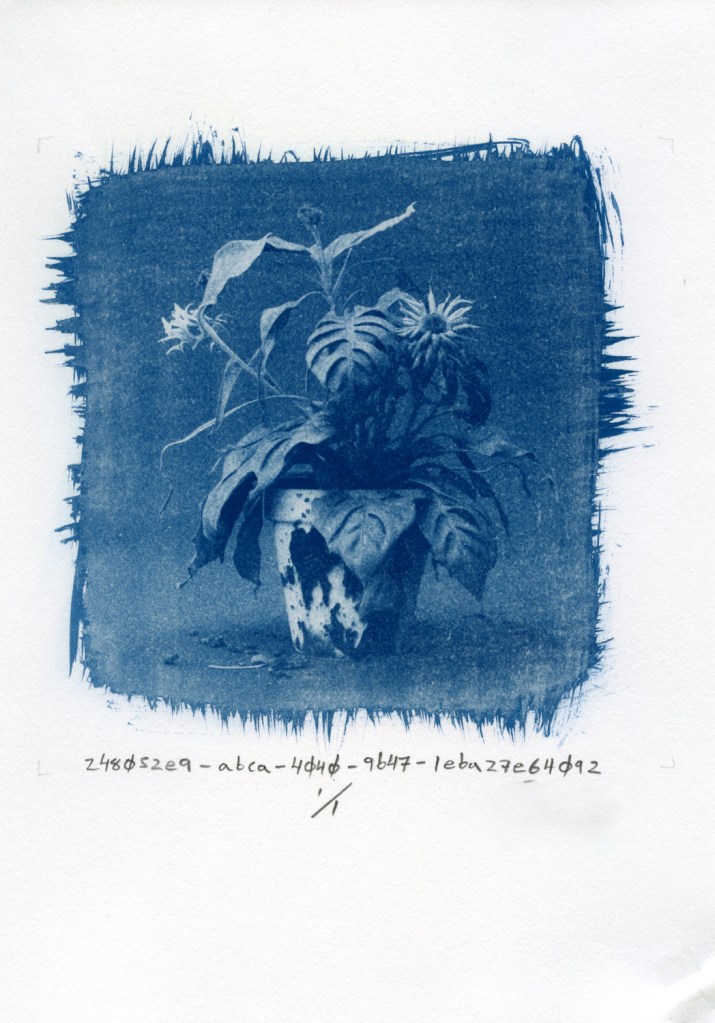
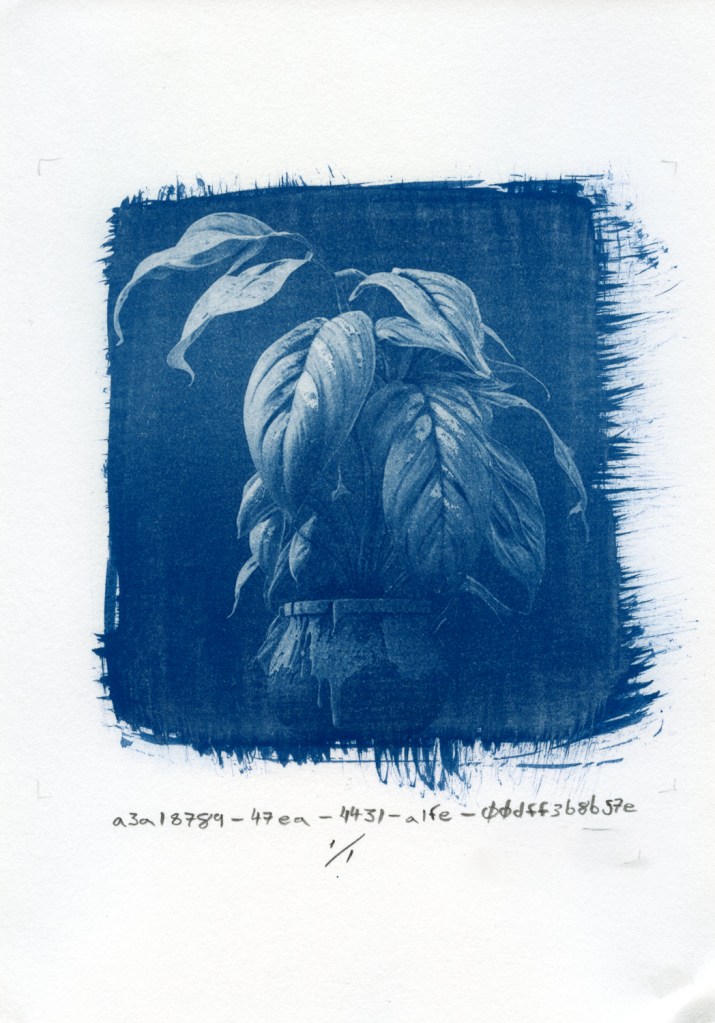

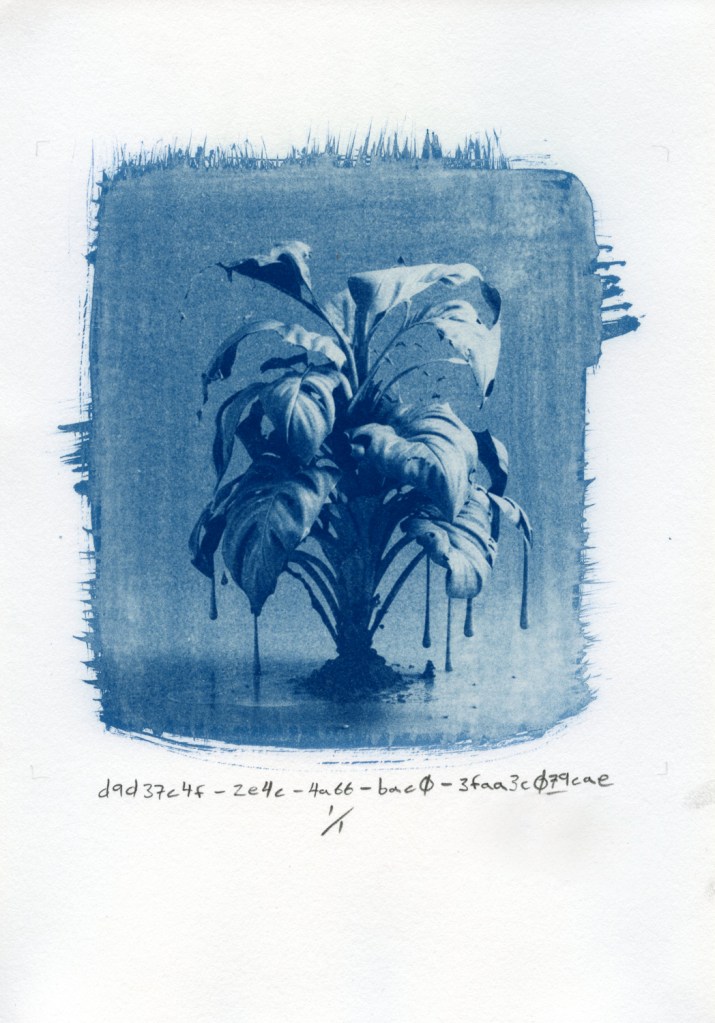
I elected to use the classic Cyanotype process invented in 1842 by one of the least heralded, but arguably most important members of photography’s early contributors, Sir John Herschel. Herschel originally became interested in making a process that would be able to quickly and easily reproduce his handwritten scientific research notes to quickly share them with his peers, he was looking at it from a purely scientific point of view. The process comes from an era in photography when the medium was not considered an art form, nor were its practitioners considered to be artists. The value of photographs was only sentimental or in their ability to describe something we wanted to better understand. Photographs in that period were mostly scientific, scenic, or portraiture and none of this work appeared in traditional galleries or salons yet. The general attitude of professional artists and other creatives, most famously the French poet Baudelaire, was dismissive or outright hostile in their critique of the medium. If this all sounds familiar it’s because works created using AI are facing a similar critique at the moment.
Photography and Artificial Intelligence share a similar beginning, so as a photographer, I was immediately drawn to this technology, perhaps from empathy. As an artist, my role is to ask questions, and this felt like a good one for this moment in the evolution of AI and its integration into the arts. Is AI authentic, is it real, is anything anymore? “Everything is real, and nothing is real” according to Philip Toledano, another AI Creator asking similar questions. All that’s certain is that AI technology has already raised significant issues in the art world while at the same time becoming the most democratic and accessible method of expressing yourself visually, it’s truly a double-edged sword, but one I will continue to wield for the immediate future.
 Conceptual Art by Todd Dobbs